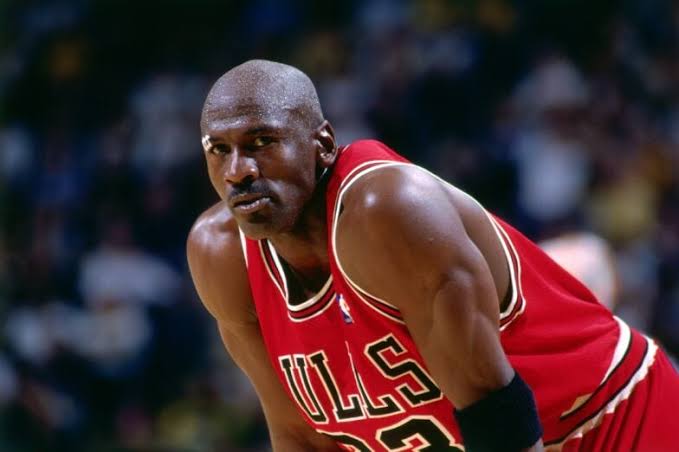
We’ve looked at how RealVPM works over the course of a season and even over a career so let’s look at how it can be used for individual games. No better place to start than assessing a performance from basketball superstar and cultural icon, Michael Jordan.
On November 17, 1990, the Chicago Bulls traveled west to the Seattle Center Coliseum for an early-season matchup with the SuperSonics. Chicago entered at 5–4, while Seattle, who had a young Gary Payton and rookie Shawn Kemp, sat at 3–3, eager to defend their home floor. What unfolded that night was not a conventional battle, but rather a showcase of how Michael Jordan could impact an entire game in less than 30 minutes.
Jordan’s stat line looks almost impossible: 33 points in just 27 minutes, shooting 13-for-20 (65%) from the field and 7-for-8 from the free-throw line, with zero three-point attempts. Without the benefit of modern spacing or long-range shooting, Jordan carved up Seattle’s defense with a blend of mid-range precision, slashing drives, and relentless efficiency.
But the story of this performance extends beyond the scoring. In that short span, Jordan also contributed four rebounds (one offensive, three defensive), three assists, seven steals, and one block. Just as notable, he committed only one turnover and, perhaps even more impressively, played foul-free basketball.
The advanced metrics elevate this night from memorable to historic. Jordan posted an offensive VPM (value per minute) of 220.9 and a defensive VPM of 204.1, evidence of dominance on both ends. He averaged 1.67 actions per minute, a rate suggesting that nearly every possession with him on the floor tilted the game in Chicago’s favour.
Even more striking is the FVPM (financial value per minute) calculation: Jordan’s outing was worth $12,882.50 per minute, totaling $347,827 for the night. Put simply, in less than three quarters of action, he produced the kind of impact most players would struggle to match across a week of games.
Defensively, his seven steals stand out as the defining number. Seattle’s backcourt never looked comfortable initiating offense, as Jordan’s instincts and anticipation disrupted passing lanes and created fast-break chances. His lone block reinforced his defensive versatility, while the zero fouls underscored a rare balance between aggression and discipline.
Offensively, the efficiency borders on flawless. Without attempting a single three-pointer, Jordan compiled 33 points through high-percentage looks and a near-perfect night at the line. In an era before analytics emphasized shot efficiency, he delivered a blueprint for it—maximizing every trip down the floor.
The Bulls would go on to win easily, but the victory itself is almost secondary to the performance. Jordan didn’t just help Chicago secure its sixth win of the season—he delivered a live demonstration of how one player could compress greatness into 27 minutes of court time.
The 1990–91 season is remembered as the dawn of the Bulls’ dynasty, capped by Jordan’s first NBA championship. Yet games like the one at the Seattle Center Coliseum remind us that Jordan’s legend wasn’t built only on the big moments. It was built on nights where he made extraordinary efficiency look routine—nights where he left the floor early and still managed to dominate every metric available.
In the heart of Seattle, Jordan proved that even in limited minutes, his impact was anything but limited.