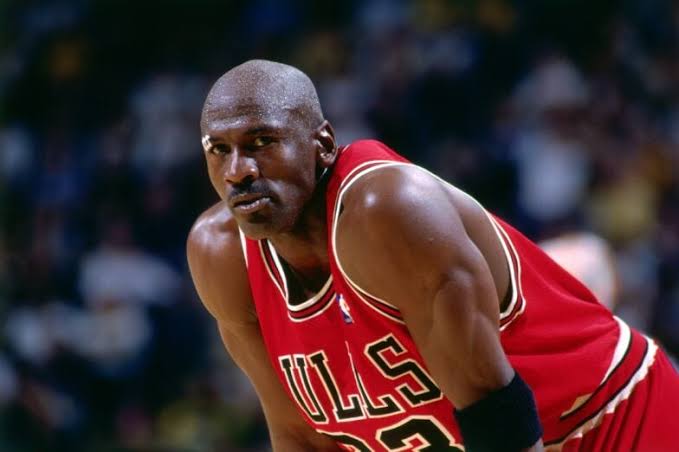
Financial RealVPM is a statistical model that translates on-court production into dollar value using the current league’s median salary as a baseline. It doesn’t measure marketing power, championships, or cultural impact — only the statistical value generated. Here we will look out what Michael Jordan was able to produce per game in the regular season and playoff runs.
By applying Financial RealVPM, we can see how Jordan’s career evolved, from rookie sensation to dominant champion to still-valuable veteran. In order to place it into context,, we compared him directly to the MVPs and superstars of each era to show how he measured up across decades.
Rookie Season (1984–85)
Jordan: 38.3 mpg, 1.31 APM, $140,726K FVPM
Larry Bird (MVP): 39.5 mpg, 1.65 APM, $163,328K FVPM
Jordan burst onto the NBA scene as a ready-made star. His rookie regular season value was already close to Bird’s — the reigning MVP and the league’s best player at the time. In the playoffs, Jordan actually increased his activity per minute (42.8 mpg, 1.39 APM, $133,562K FVPM), showing his ability to raise his game when it mattered most.
Although his involvement in plays went up, his efficiency dipped a little as can be seen by the lower FVPM. This is normal due to the increased defensive pressure from higher quality teams.
Pre-Championship Years (1986–1990)
Jordan: 39.9 mpg, 1.45 APM, $171,923K FVPM
Magic Johnson (MVP seasons): 36.7 mpg, 1.32 APM, $144,636K FVPM
These were Jordan’s statistical peak years in terms of volume and activity. His per-minute actions were among the highest of his career, and FVPM shows him generating superstar value even before winning rings. Compared to Magic — the era’s most decorated player — Jordan’s dollar value was already higher, proving that championships were the only thing missing.
First Three-Peat (1991–1993)
Jordan: 38.3 mpg, 1.35 APM, $157,784K FVPM
Charles Barkley (1993 MVP): 37.8 mpg, 1.30 APM, $129,625K FVPM
Here Jordan combined scoring, defense, and efficiency into balanced dominance. His FVPM stayed comfortably above his rivals, even Barkley during his MVP year. In the playoffs (41.2 mpg, 1.37 APM, $144,695K FVPM), Jordan maintained nearly the same value under maximum pressure, cementing his role as the dominant superstar of the early 90s.
Second Three-Peat (1995–1998)
Jordan: 38.1 mpg, 1.25 APM, $126,461K FVPM
Hakeem Olajuwon (peak years): 37.0 mpg, 1.36 APM, $150,085K FVPM
Older but wiser, Jordan’s statistical dollar value shows a modest decline, reflecting lower per-minute activity. Meanwhile, Hakeem Olajuwon was at his peak, putting up monster statistical value as the league’s dominant big man. Even so, Jordan’s FVPM remained elite — particularly in the playoffs (41.5 mpg, 1.24 APM, $116,100K FVPM) — and combined with his leadership, he still powered Chicago to three more titles.
Wizards Comeback (2001–2003)
Jordan (pre-injury 2001–02): 40.1 mpg, 1.24 APM, $107,935K FVPM
Tracy McGrady: 38.3 mpg, 1.26 APM, $119,404K FVPM
Kobe Bryant: 40.9 mpg, 1.26 APM, $107,820K FVPM
At ages 38–40, after years away from the game, Jordan still produced statistical value greater than many All-Stars. In fact, before his knee injury, his dollar value matched that of Kobe Bryant and was only slightly behind McGrady — two players in their athletic primes. Even in his late 30s, Jordan’s statistical worth was on par with the best young stars in basketball.
This era was also notorious for its slower pace and known as the dead ball era so FVPM was a lot lower than other eras.
Conclusion
Michael Jordan’s career, viewed through Financial RealVPM, shows one of the most impressive ones for sustained statistical value in NBA history. His peaks in the late 1980s and early 1990s reflect game-changing activity and dominance, while his ability to maintain high FVPM into his late 30s proves his greatness wasn’t limited to one era.
When compared to MVPs like Bird, Magic, Barkley, Hakeem, Kobe, and McGrady, Jordan consistently ranked at or above his contemporaries. Of course, his true value extended far beyond numbers — championships, cultural impact, and the global growth of basketball. But when measured strictly by statistical production, his dollar value was befitting of his legendary legacy